UIUX design and art
At Hardsuit Labs, I contributed to user experience design and interface artistry as part of a team working on a major PC-to-console game conversion, Marvel Heroes. I redesigned and adapted existing PC game interfaces for console platforms, ensuring optimal user experience. Collaborated with development teams to implement responsive design solutions that maintained the original game's aesthetic while optimizing for console hardware and user expectations.
Hero Roster
Hey! I'm cool too!
Marvel Heroes, was an immersive free to play MMO with action RPG gameplay, loot-driven itemization, character advancement, and a deep storyline. Players got to play as their favorite Marvel hero from a massive Marvel superhero roster of over 60 characters, heroes and villains, including Spider-Man, Captain America, Iron Man, Thor, and many others.
The core gameplay loop focused on defeating enemies, collecting loot upgrades, and collecting characters. This created an addictive fight-loot-upgrade cycle as players worked to optimize their favorite heroes while experiencing storylines written by Marvel comics veteran Brian Michael Bendis.
The Problem:
Originally developed for PC with a UI architecture built around popup windows and hover states, the game worked well for mouse and keyboard users.
The challenge emerged when the project scope expanded to include console platforms. This approach created major usability barriers: controllers couldn't efficiently navigate nested popups, selection states were unclear, and the overall experience would feel clunky and frustrating for console players.

When the player examined their loot, the same item card was re-used.
The item inspect screen was not helpful for players

The popup-heavy design also wasted screen space and condensed game information, leading to discoverability and navigation problems.
For example: the purchasing popup showed only a small static image preview while completely covering the detailed 3D model that players needed to evaluate their purchase decisions
Wires
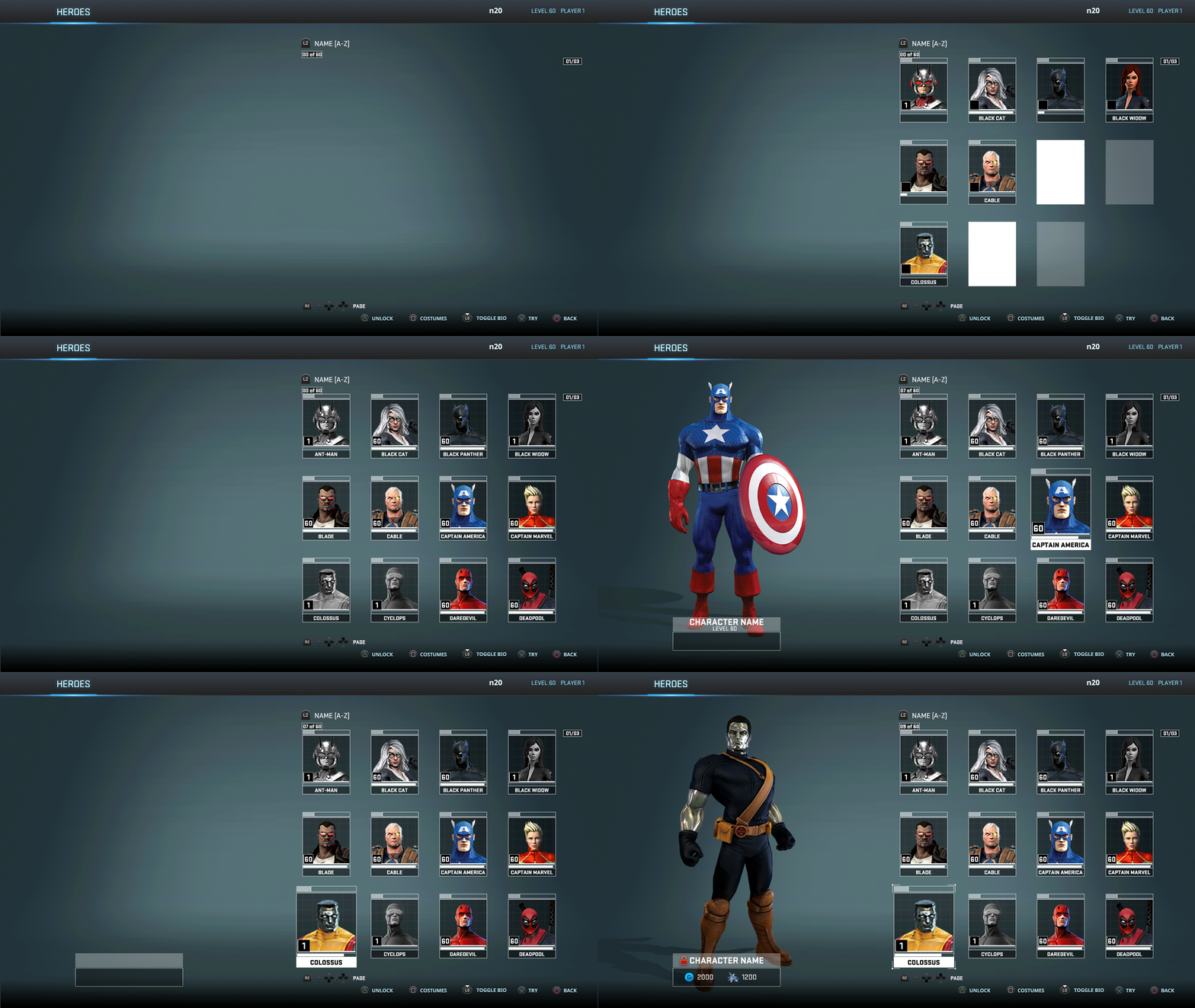
I analyzed how these popup-heavy interfaces conflicted with controller navigation and console user expectations. Our team's approach to restructuring the interface, moving away from popup-dependent interactions toward navigation systems that felt natural and intuitive for console players across all target platforms.


... and Iterations
Also, the client wanted to present as many characters as possible. Their data revealed that expected top-performing characters sold as expected, but secondary characters did not. Signaling issues with discoverability.
Multiple states of owned, sale, and locked needed to be address within such a small space. The idea of just another icon all grouped together was overwhelming.
After researching comparable games with high-volume product stores, I made several key design improvements. I created better filtering options and organized characters into logical groups. I broke the character roster into smaller pages so users wouldn't feel overwhelmed. I spread popular characters across different pages to give lesser-known characters more exposure, like placing famous Spider-Man with lesser known Black Cat, Daredevil, and Nova. I also made it easier to find costume options by connecting them directly to each character instead of keeping them in a separate area.
These changes were designed to make the experience more enjoyable for users and help them make decisions more quickly.
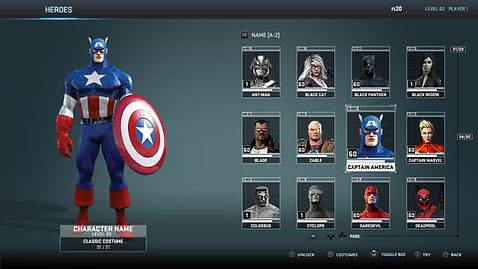

Final Approval:
After feedback and iterations, I completed a high fidelity mockup that was approved. Along with serval rounds of motion comps to aid in the implementation of this section.
The motion comps were very well received which led to additional tasks regarding loot boxes, monetization mechanics, and microtransactions of the project.
The results showed a strong uptick in discovery and sales following the project's release on console platforms. Players were able to easily navigate and purchase items with reduced friction and an improved overall experience.